Choose the channel that matches the problem
Australians dealing with a suspected prohibited online-casino service may need more than one reporting channel. ACMA receives reports about interactive gambling services, but a payment dispute with a bank, an unrecognised transaction and suspected payment impersonation are different issues.
The green evidence signal means current primary government sources document the relevant reporting routes. It does not mean a gambling service is safe, lawful or reliable. A report is not a regulator finding, and submitting one does not guarantee that money will be recovered.
ACMA’s interactive gambling complaint form covers complaints about interactive gambling services and provides a postal alternative as well as separate form categories. That scope was checked on 2 August 2026: ACMA interactive gambling complaint form.
ACMA also warns about limits on consumer protections when dealing with illegal gambling operators and provides avoidance guidance. That material was checked on 2 August 2026: ACMA guidance on illegal gambling operators.
Decision and evidence matrix
| Concern | Primary route | Evidence to retain | What the route does not prove |
|---|---|---|---|
| A service appears to offer prohibited interactive gambling to Australians | ACMA interactive gambling complaint process | Exact domain, full URL, date and time accessed, account-facing messages and relevant terms | Filing a report does not establish a breach |
| A card or account transaction is unrecognised | Financial institution first | Statement entry, amount, date, merchant descriptor and contact records | A payment descriptor alone does not identify misconduct by a casino |
| A financial firm has not resolved a banking or payment complaint | The firm’s internal complaint process, followed by AFCA where applicable | Complaint reference, final response, timeline and transaction records | AFCA escalation does not guarantee reimbursement |
| Payment impersonation or a suspected scam is involved | Financial institution promptly and Scamwatch for general scam reporting | Messages, phone numbers, payment instructions, URLs and receipts | A Scamwatch report is not a finding against a named operator |
| Gambling is causing harm or loss of control | A gambling-support service | Only the information needed to obtain support | Support services do not determine whether a gambling service breached the law |
When the concern belongs with ACMA
An ACMA report is the relevant starting point when the concern is the apparent provision or promotion of a prohibited interactive gambling service in Australia. Preserve what was actually observed rather than trying to reach a legal conclusion. Useful records include the exact domain, complete page URL, access date, screenshots of relevant offers or account messages, and copies of terms available at the time.
Domain precision matters. Similar names, redirects and mirror domains can point to different services. Record the address exactly as shown in the browser, including the top-level domain and any meaningful path. Do not treat a brand name, an absent directory entry or an unfamiliar domain as proof of fraud.
The supplied primary sources establish complaint scope and consumer-protection guidance only. They do not contain a finding against a particular casino, legal entity or domain. No operator terms, KYC rules, payment methods, withdrawal conditions, support exchange, complaint response, licence record or contextual user report was supplied for a named service. Those layers therefore remain unresolved rather than inferred.
No gambling account was opened. No deposit, withdrawal, transaction, KYC flow, support contact or complaint submission was tested. There is also no first-hand evidence about response times, payment outcomes or how ACMA would assess a particular report.
Separate payment disputes from service reports
If a transaction is unrecognised, contact the relevant Australian financial institution promptly using a trusted contact channel. Preserve the statement entry exactly, including the date, amount, currency and merchant descriptor. Do not alter screenshots or crop away surrounding context that may help identify the transaction.
A dispute about a bank’s handling of deposits or payment products ordinarily begins with the financial firm’s internal complaint process. AFCA documents an external escalation route for banking deposits and payment issues after that internal process. The route was checked on 4 August 2026: AFCA banking deposits and payments complaints.
AFCA’s role is distinct from ACMA’s. ACMA can receive information about an interactive gambling service; AFCA deals with eligible disputes involving financial firms. Depending on the facts, the same incident may create separate records for ACMA, the financial institution and AFCA. Keep the wording factual and tailored to each recipient.
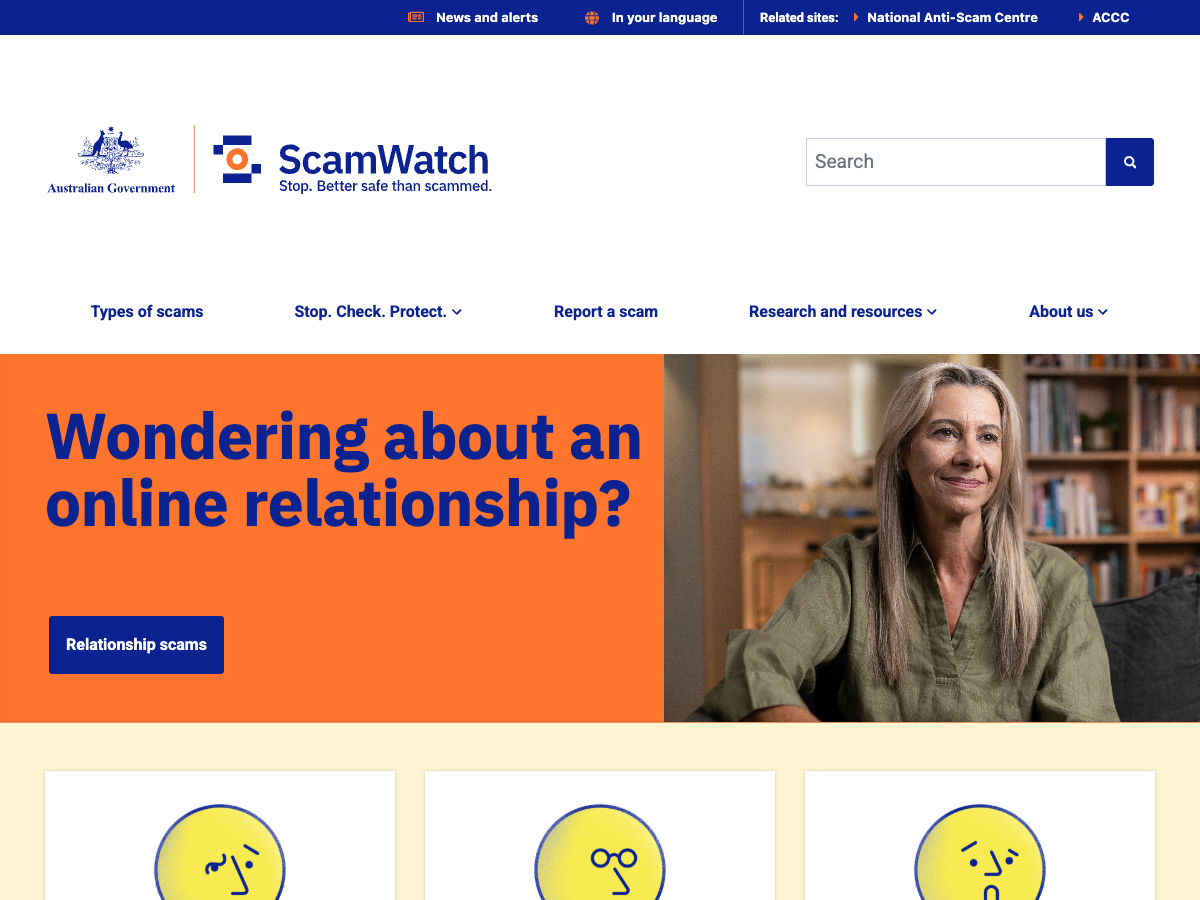
For suspected impersonation or scam conduct, Scamwatch provides general payment and scam-safety guidance. The supplied record, checked on 29 July 2026, does not make an allegation about any named casino: Scamwatch. Contacting Scamwatch does not replace urgent contact with a bank when payment credentials or funds may be at risk.
For additional practical precautions, consult the local payment-scam guide.
Dated reporting checklist
| Stage | Record to create or preserve | Date to attach | Why it matters |
|---|---|---|---|
| Identify the service | Exact domain, full URL and any redirect destination | Date and local time observed | Distinguishes one web address from similarly named services |
| Capture the relevant conduct | Unedited screenshots, messages and available terms | Date captured and, if shown, publication date | Preserves what was visible without asserting that it proves a breach |
| Trace a payment | Amount, currency, merchant descriptor and receipt | Transaction and settlement dates | Helps the financial institution identify the payment |
| Contact the financial firm | Complaint reference, channel used and copies of correspondence | Date of every contact | Documents completion of the internal complaint process |
| Report to ACMA | Copy or summary of submitted facts and attachments | Submission date | Maintains a consistent record; submission remains a report, not a finding |
| Consider AFCA | Internal complaint outcome and supporting banking records | Final-response date and escalation date | Shows the sequence relevant to external financial-dispute escalation |
| Record suspected scam contact | Messages, payment instructions, phone numbers and URLs | Date received or observed | Preserves indicators for the bank and Scamwatch without proving attribution |
Before submitting, distinguish direct observations from assumptions. “The domain displayed this offer at 3:20 pm” is an observation if supported by a dated record. “The operator broke the law” is a legal conclusion and should not be presented as an established fact unless a competent authority has made that specific finding.
Do not present an operator’s own claims as independent confirmation. Operator terms establish only what the operator published on the checked date. User posts, if later collected, remain contextual allegations rather than verified events. A regulator finding must be confined to the named entity, service, conduct and dated official record.
What ACMA guidance means for consumers
ACMA’s consumer guidance says protections may be limited when people use illegal gambling operators and offers advice intended to help consumers avoid them. The observation comes from primary guidance checked on 2 August 2026: ACMA consumer-protection guidance.
That guidance supports caution, not a recovery promise. It does not establish that every unfamiliar casino is illegal, that every payment will be lost or that ACMA can obtain a refund. Likewise, the Interactive Gambling Act context does not allow a consumer to determine a breach from a brand name alone.
People who need help managing gambling can use the listed Australian gambling-support organisations. That route is non-commercial and separate from regulatory or financial-dispute processes.
Evidence method and corrections
The editorial desk and evidence editor identified in the publication byline assess claims against dated primary records. Government-source observations are kept separate from operator statements, contextual user reports and unresolved allegations. The investigation method explains that separation, while editorial identity and the documentary correction route are available through about the editor.
Material corrections should identify the disputed wording and provide a dated primary record where possible. A correction request is evidence for review, not automatic proof that either the original wording or the requested replacement is correct.
Frequently asked questions
Which online-casino concerns belong with ACMA?
Concerns about the apparent provision or promotion of a prohibited interactive gambling service to Australians can be reported through ACMA’s interactive gambling complaint process. Preserve the exact domain and describe observed conduct without claiming that a breach has already been established.
Does filing an ACMA complaint prove a breach?
No. A submission is a report for assessment, not a regulator finding. It does not prove illegality, establish misconduct by a named operator or guarantee an investigation, response, refund or recovery.
Where should an unrecognised casino payment be reported?
Contact the relevant financial institution promptly through a trusted channel and preserve the transaction details. If the firm’s internal complaint process does not resolve an eligible banking dispute, AFCA may provide an external escalation route. Suspected scam conduct may also be reported to Scamwatch.
What exact-domain evidence should be saved before reporting?
Save the complete URL, exact domain, access date and time, redirects, relevant screenshots, messages and terms visible at the time. Keep original files where possible and avoid treating a similar brand name or an absent listing as proof of fraud.
Can ACMA or AFCA guarantee that lost money will be recovered?
No. The supplied sources document complaint and escalation routes, not guaranteed outcomes. ACMA reporting, a bank dispute, an AFCA complaint and a Scamwatch report each serve different purposes and none creates a recovery guarantee.